

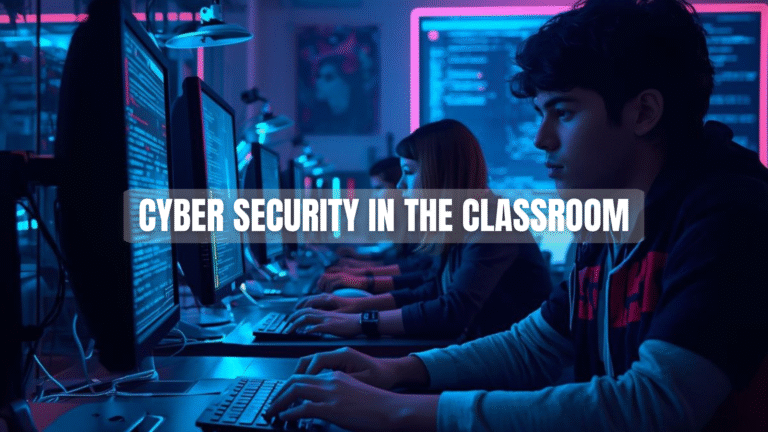
Cyber Security in the Classroom: Protecting Students in the Digital Age
In today’s hyper-connected world, classrooms have extended beyond four walls. Students are constantly engaging with digital platforms, from online learning portals to interactive tools, social media, and cloud-based assignments. While this digital integration enhances learning experiences, it also opens doors to cyber threats. Therefore, cyber security in the classroom is not just an option anymore – it is a necessity.
The Digital Transformation of Education
The education sector has undergone a massive digital transformation in recent years. With the rise of e-learning, virtual classrooms, and digital resources, students now have access to knowledge like never before. Teachers use interactive platforms, online assessments, and cloud-based collaboration tools to make lessons more engaging. However, this increased reliance on technology has also made schools more vulnerable to cyber risks.
Cyber criminals often target educational institutions because of their valuable data, which includes personal student information, financial details, research records, and more. Schools often lack the advanced security infrastructure that businesses may have, making them attractive targets.
Common Cyber Threats in Schools
- 1. Phishing Attacks : Fraudulent emails or messages designed to trick students or staff into revealing personal information or login credentials.
- 2. Ransomware : Malicious software that locks down school systems and demands payment to restore access.
- 3. Data Breaches : Unauthorized access to sensitive student records and financial details.
- 4. Cyberbullying : Students misusing digital platforms to harass or bully peers.
- 5. Inappropriate Content Exposure : Accidental or intentional access to harmful online content.
These threats highlight the urgent need for comprehensive cyber security measures in classrooms.
Risks of Learning Management Systems (LMS) and School ERP Software
While Learning Management Systems (LMS) and school ERP (Enterprise Resource Planning) software provide convenience in managing classes, attendance, and assignments, they also pose significant risks. Many ERP providers collect and store large volumes of student data, which may
be misused. Reports suggest that student data is sometimes shared or even sold to marketing companies for targeted advertising. This compromises student privacy and creates ethical concerns.
Most school ERP platforms also contain parents’ financial information such as fee payments, bank details, and transaction records. Leaking such highly sensitive data poses a serious threat, as it may lead to identity theft, financial fraud, or misuse by third parties.
Additionally, ID card and access control systems, may also track and store sensitive information. If such data falls into the wrong hands, it could be exploited for marketing purposes or more harmful activities. Schools must evaluate the vendors they partner with and ensure strict contracts on data privacy.
Risks for IT Teachers and School Liability
IT teachers face unique risks when introducing students to internet tools, email systems, and online platforms. For instance, some students might misuse these resources, such as sending prank or threatening emails as a joke. However, such actions can have serious consequences, as the IP address is linked to the school’s network, potentially drawing the school into legal trouble. This risk underscores the importance of supervision, clear policies, and digital citizenship education
Why Cyber Security Matters for Students
Students, being among the most vulnerable internet users, often remain unaware of the risks of sharing personal details or clicking suspicious links, which can lead to identity theft, academic disruption, emotional distress from cyberbullying, and long-term personal or professional consequences; therefore, prioritizing cybersecurity in classrooms is essential not only to protect devices but also to safeguard young minds, foster responsible digital behavior, and create safe learning environments while imparting critical life skills.
Strategies for Strengthening Cyber Security in Classrooms
- 1. Digital Literacy Education : Teaching students about online safety, recognizing phishing attempts, and understanding the importance of strong passwords.
- 2. Implementing Strong Password Policies : Encouraging the use of complex, regularly updated passwords to reduce unauthorized access.
- 3. Multi-Factor Authentication (MFA) : Adding an extra layer of security by requiring more than just a password for account access.
- 4. Regular Software Updates : Ensuring all devices and platforms used in classrooms are updated with the latest security patches.
- 5. Secure Networks : Schools must implement firewalls, encrypted Wi-Fi, and safe browsing filters to protect students.
- 6. Data Privacy Policies : Clear rules for how student information is collected, stored, and shared can minimize risks.
- 7. Monitoring and Supervision : Teachers and administrators should monitor student activities on school devices and platforms to detect potential threats.
- 8. Cyberbullying Awareness Programs : Establishing policies and support systems to address online harassment.
- 9. Vendor Accountability : Schools should ensure ERP and LMS providers comply with strict privacy standards and do not misuse student or parent data.
- 10. Legal Awareness : Students and the wider school fraternity must be made aware of the legal framework surrounding cyber offences. This ensures students do not take such offences lightly, while teachers are equipped to address issues in an appropriate and lawful way.
The Role of Teachers and Parents
Teachers play a vital role in educating students about safe online practices. Incorporating digital safety lessons into the curriculum helps build awareness from an early age. Similarly, parents must reinforce these lessons at home. By working together, schools and families can create a consistent and effective shield against cyber threats.
For example, teachers can organize workshops where cybersecurity experts interact with students, demonstrating real-world threats and prevention methods. Parents, on the other hand, can set healthy screen-time boundaries and monitor the apps their children use.
The Future of Cyber Security in Education
As technology evolves, so will cyber threats. Artificial intelligence, machine learning, and advanced analytics will soon become integral to detecting and preventing cyberattacks in educational settings. Schools must adopt proactive security measures, not just reactive solutions.
Moreover, governments and educational boards must prioritize funding for digital infrastructure, ensuring that schools have the tools to combat cybercrime. Public-private partnerships can also play a key role, with cybersecurity companies offering training and resources to schools.
Conclusion
Cyber security in the classroom is no longer an optional add-on – it is a fundamental requirement for modern education. Protecting students in the digital age means safeguarding not just their personal information but also their mental and emotional well-being. By combining strong security
measures, digital literacy, and collaborative efforts between teachers, parents, and policymakers, we can build safer classrooms for the next generation.
The digital age offers immense opportunities for learning, but only if we ensure that safety and security remain at the core of education. After all, protecting students online is just as important as protecting them within the walls of a classroom.
About the Author:
- Dr. Anoop Mathew.
The author is a consultant to leading EdTech companies and prominent educational groups across India and the Middle East.