
From Supervision to Facilitation: Rethinking IT Classroom Management in the Age of AI
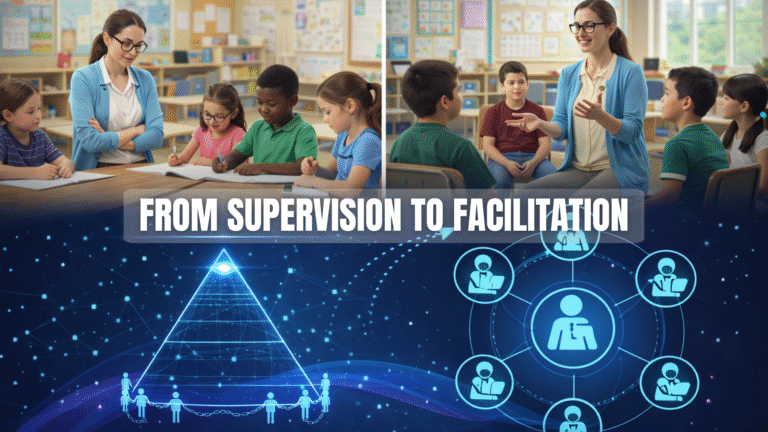
Artificial Intelligence is reshaping education, and IT classrooms are feeling the change more than most. In the past, a teacher’s job was to keep a close eye on students, check their work, and make sure to adhere with the rules. Now, AI tools can take over routine tasks, help students solve problems instantly, and even personalize learning on the spot. This has shifted the teacher’s role from controller to guide — a big change for computer science, programming, and other techrelated subjects.
The Shift from “Watching” to “Guiding”
In traditional IT classes, supervision meant checking every line of code, giving timed exercises, and monitoring for mistakes or cheating. It kept discipline but often stifled creativity — students spent more time memorizing than truly understanding. With AI in the mix, things are different.
Tools like GitHub Copilot or Shiksha Copilot can instantly correct code, explain complex concepts, or create examples in multiple languages. They also introduce new skills, like prompt engineering (the ability to ask AI the right questions), which is becoming as important as knowing syntax or algorithms. AI even helps to identify where a class is struggling, whether it’s loops, data handling, or networking, so teachers can focus on the tough spots instead of policing behavior.
Rewriting Lesson Plans for the AI Age
To optimize the advantages of AI, lesson plans need a redesign. Old methods of lectures followed by drills don’t cut it anymore. Now, AI can help create active and flexible learning experiences that are adapted to each student’s pace and skill level.
Key changes include:
- Personalized Learning Paths : AI adjusts difficulty, giving advanced challenges to quick learners and more guidance to those who need it. Incorporating Adaptative Assessment (Assessments which changes the difficulty level of questions based on the student competency) to the lesson-plans are highly recommended.
- Project-Based Learning : Instead of repetitive exercises, students work on group projects (like building AI apps). AI can provide starter code while teachers add offline problemsolving activities for inclusivity. This can be done as an in-class activity.
- AI Literacy : Lessons should cover how to use AI responsibly — checking its work, spotting bias, and refining prompts.
- Multilingual & Inclusive Content : AI can translate and adapt materials, but teachers must review for accuracy and cultural fit.
This combination of human oversight and AI support, makes lessons more engaging and relevant to real-world tech work.
Transforming Homework and Assignments
If homework stays the same, students will simply let AI do it for them. Instead, tasks should focus on thinking, analysis, and creativity.
The following changes suggested:
- From Copy to Critique : Ask students to evaluate AI-generated code for errors, ethics, or performance, and explain their reasoning.
- AI-Integrated Challenges : Have AI generate questions or solutions for students to improve. For example, “Use AI to propose a fix for a cybersecurity problem, then check if it follows ethical guidelines.”
- Show the Process : Don’t just look on to the end answers- ask the students to submit early drafts, AI chat logs, and step-by-step changes to highlight the learning journey
- Clear Use Policies : Set rules for how AI can be used, and promote teamwork where AI is part of the collaboration. Teachers can use online collaboration platforms for this, provided the learners have good connectivity and devices.
It is expected that when homework is designed this way, students engage more deeply and develop stronger problem-solving skills
Balancing the Benefits and the Risks
AI can make learning faster and more inclusive, but it’s not a perfect substitute for human guidance. Over-reliance can weaken foundational skills, and not all students have equal access to these tools. Teachers need training to integrate AI effectively and ensure it supports — not replaces — critical thinking.
The future of IT classroom management is about Facilitation, not supervision. By redesigning lesson plans and assignments for the AI era, educators can create a space where technology enhances learning, and students graduate not just knowing how to code, but knowing how to think.
Author:
- Dr. Anoop Mathew.
The author is a consultant to leading EdTech companies and prominent educational groups across India and the Middle East.